Executive Roundtable Series — Destiny Speaks
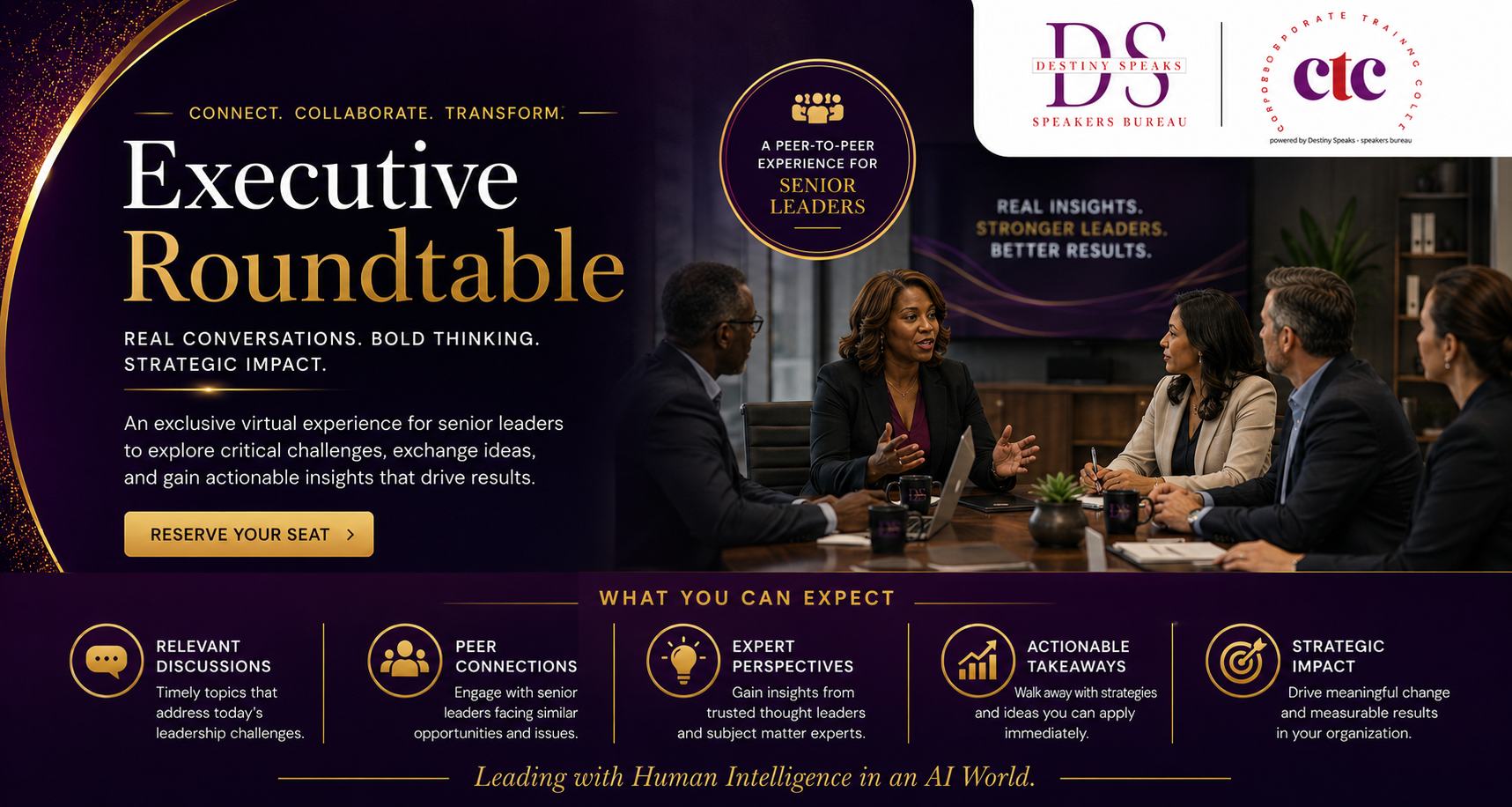
Next Roundtable
Coming Up Next
CLOSING THE DEMAND GAP
Why Capable Leaders Stall When the Moment outpaces their current capacity
Most leaders are promoted because they are capable. They are technically strong, reliable, experienced, and successful at getting the work done. They know how to perform. They may not have been developed to lead.
The challenge is that many leaders were developed for the job they had—not the leadership role they now have.
This Executive Round Table will explore the Demand Gap: the distance between what leadership requires today and the capabilities leaders have been developed to bring to the moment.
IN THE ABSENCE OF CLOSING THE DEMAND GAP:
- • High performers get promoted for their expertise but continue managing the work instead of leading the people.
- • Leaders rely on expertise, authority, or basic communication and struggle to create commitment when things get difficult.
- • When teams span generations, cultures, and backgrounds, misunderstanding creates friction and missed opportunities.
- • Trust is assumed rather than intentionally built—and becomes most visible when pressure hits.
- • Leaders miss the signals beneath the surface until it becomes disengagement, conflict, turnover, or stalled initiatives.
The result: Capable leaders can fall further behind what the organization and the moment demand—while organizations experience the performance, engagement, and retention consequences of a leadership capacity that hasn't kept pace.
We will discuss…
- • The Demand Gap: The distance between what leaders have been producing vs. what the moment demands.
- • From Performer to Leader: Why being excellent at the work doesn't automatically prepare someone to lead the people doing the work.
- • The Human Leadership Edge: The core human capacities leaders need to navigate today's complexity.
- • Trust Under Pressure: Why trust is one of the most important—and most overlooked—leadership capacities.
- • Leadership Development: Why organizations must intentionally develop leaders instead of waiting for leadership problems to reveal the gaps.
- • Closing the Gap: How to identify the leadership capacity that needs to be strengthened first—and turn development into improved leadership performance.
A Different Question for Leaders
Much of today's leadership conversation asks: How do we get better results from our people?
Perhaps the more important question is: Have we developed our leaders to meet the demands we are placing on them?
And beyond that: How do we intentionally close the Capacity Gap so leaders can effectively lead people, strengthen performance, and navigate the challenges of today's workplace?
Participants will walk away aware of core capacity gaps that need to be closed in today's marketplace.
Join us for this Executive Roundtable and take a closer look at where the gap exists—and what it will take to close it.
Reserve your seat for October 15.
Your Facilitator
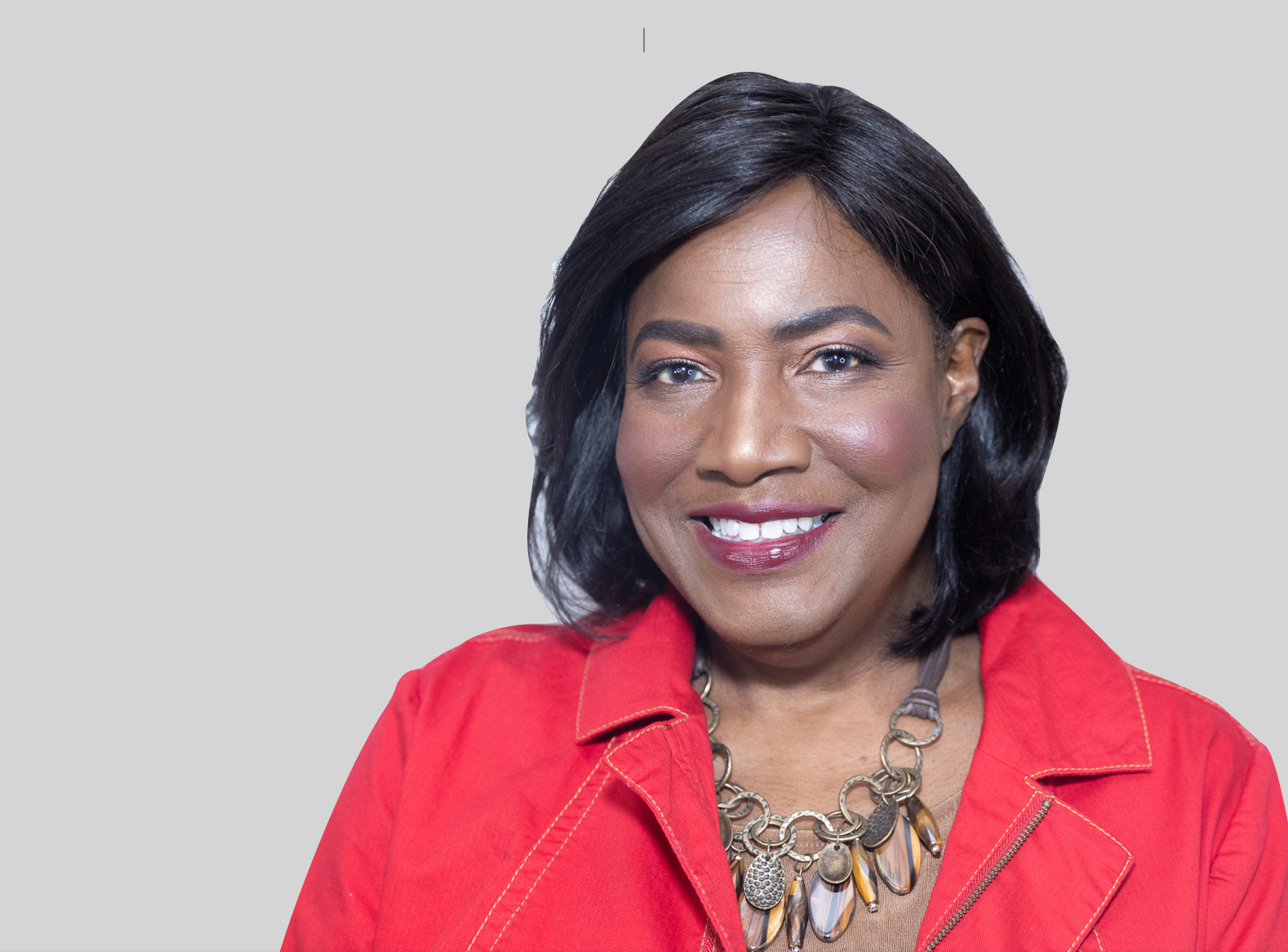
Celeste Sophia Jonson
Celeste Sophia Jonson — The Capacity Architect™ — is one of the most compelling voices in leadership today, a keynote speaker and strategist who closes the capacity gap for leaders navigating rapid change and the demands of an AI-driven world. Trusted by Fortune 500 companies, government agencies, and universities worldwide — and formerly COO to Les Brown — Celeste brings a rare combination: timely, practical frameworks delivered with high energy, genuine connection, and a signature Sonic Leadership Experience™ that embeds the message beyond the moment. Her Capacity Gap Framework™ addresses the personal, leadership, and impact gaps that quietly derail even the most talented leaders.
View Celeste's ProfileCurated peer groups
Vetted senior leaders gathered for collaborative dialogue and strategic insight.
Expert facilitation
Led by Destiny Speaks thought leaders with deep expertise in leadership and organizational performance.
Actionable takeaways
Every session closes with frameworks and strategies you can apply immediately.
Previous Roundtables
Past Sessions
August 27, 2026
Full Commitment: How Executive Leaders Build the Commitment That Executes Strategy
Most strategies don't fail in the planning room — they fail in the silence after everyone says yes. A leadership team nods, the meeting ends, and weeks later the plan stalls, because the yes in the room was never a full yes.
This Executive RoundTable explored why agreement so often gets mistaken for commitment, and what senior leaders can do to close the gap before it costs them a strategy.
In the absence of full commitment:
- • Buy-in, agreement, alignment, and consensus get treated as the finish line, when none of them are
- • A “silent veto” takes hold — people agree out loud while staying undecided in their own mind
- • Rollout stalls at whichever condition was weakest, not whichever was strongest
- • Leaders read silence in the room as agreement, and pay for that misread later
The result: Strategies that look approved on paper and never move in practice.
We discussed…
- • The most expensive yes in business — the one that looks like agreement and behaves like air
- • The four impostors mistaken for commitment: buy-in, agreement, alignment, and consensus
- • The diagnostic question that tests every yes: Is it a full yes?
- • The Commitment Standard — seven conditions, run in three phases, while a strategy is still being built
- • The ladder of yes, from compliance and agreement up to real ownership
- • The three engines of commitment: meaning, investment, and alternatives
- • The ownership window — and why it usually closes before rollout even begins
- • Three disciplines of leaders who earn real commitment: define it, lay the foundation, earn the right to ask
Facilitator

Sherrin Ross Ingram
Founder and CEO of the International Center for Strategic Planning, board-certified executive coach, and author of Full Commitment: The Hidden Advantage in Strategy Execution.
View Sherrin's Profile